Articles / For teachers and school leaders
Using Stoplight Reports to Guide Vocabulary Improvement
How I used assessment reports to help schools target weaknesses, and why that work led me to build vocabulary games that put the next learning step in students’ hands.
In my work with Wyoming schools, I used stoplight reports to help schools identify strengths, target weaknesses and focus their improvement work. Vocabulary was one area that kept deserving attention.
The value of the reports was what they helped us do next. An overall score could show a concern. Looking at individual reading skills gave schools a more specific starting point for instruction and practice. I used those patterns to help schools decide where to focus their improvement efforts.
That experience now shapes Pole Mountain Learning’s vocabulary games. I want students to have a useful next step too: focused practice, feedback they can act on and a way to see their own progress.
The snapshots below come from actual school-level reports in my archive. In these reports, green means above the proficiency standard, yellow means at or near it, and red means below it. The colors describe the report’s categories; they are not percentages correct. These are historical results for different yearly groups of students, not the same students followed over time.
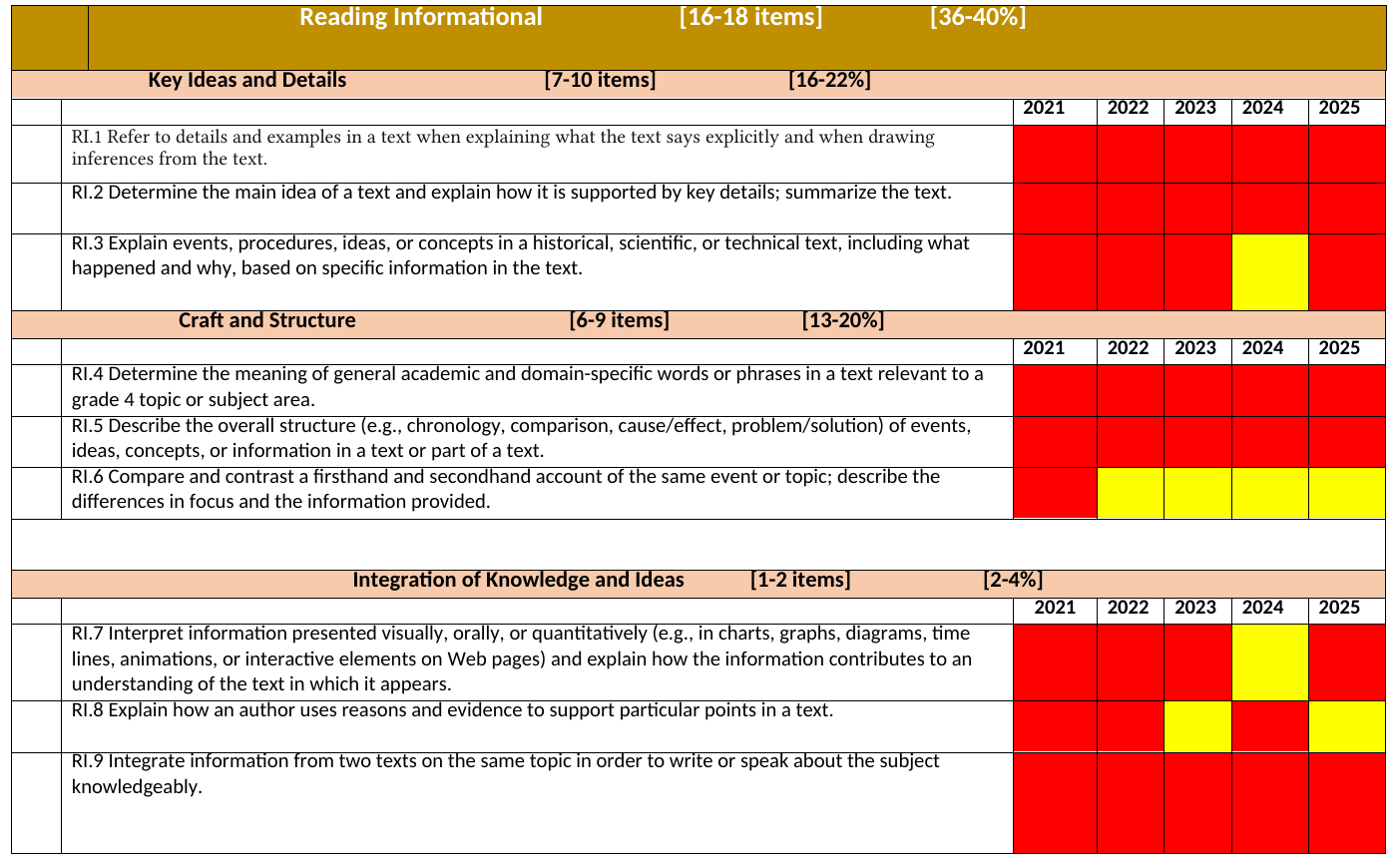
At one elementary school I worked with, the grade 4 report records red for word meaning in both literature and informational reading in every column from 2021 through 2025. The grade 3 literature word-meaning row is also red across those five years. I used patterns like this to help schools identify a specific improvement priority: understanding words and phrases within the text students were reading.
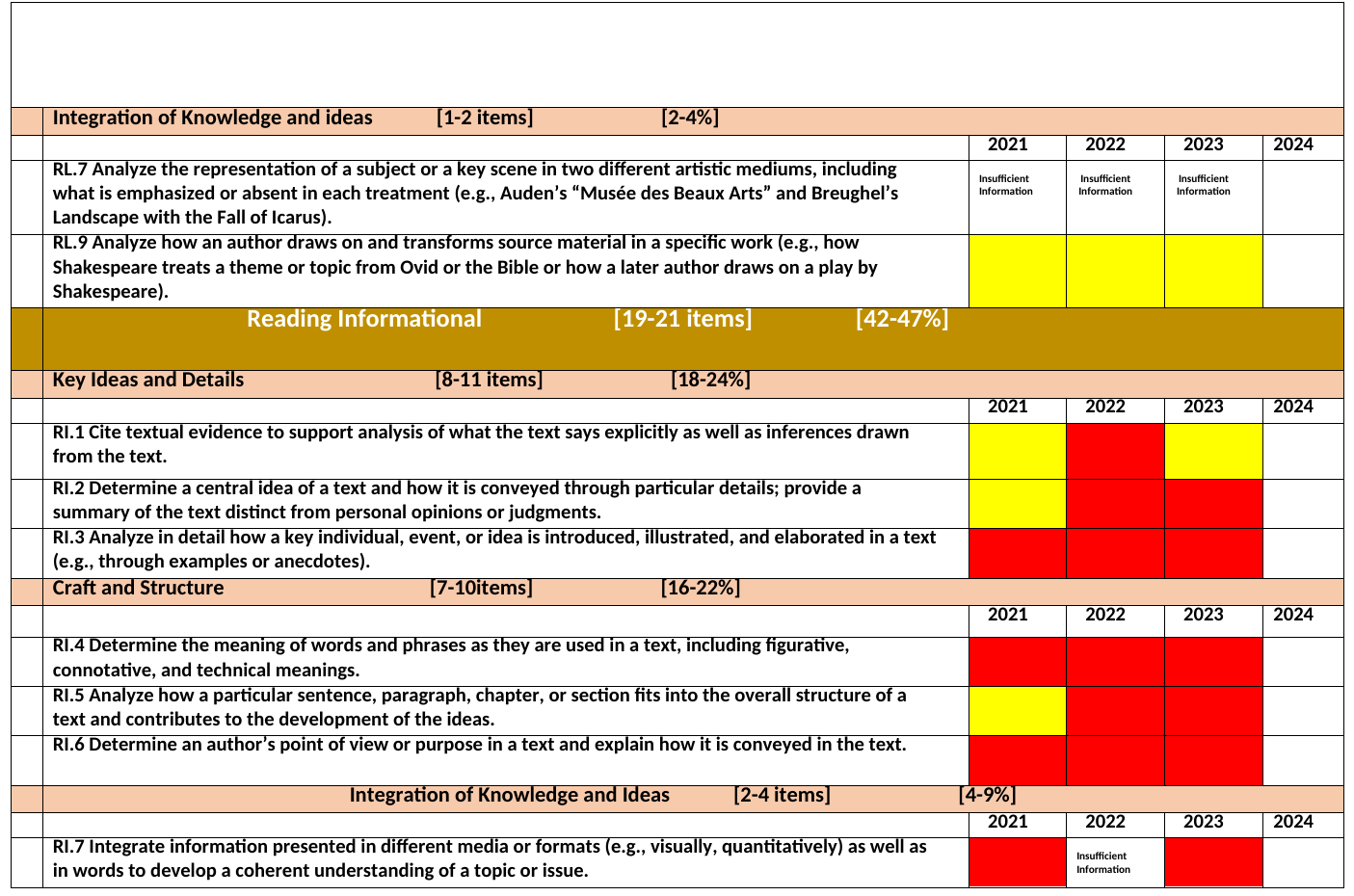
A high school I worked with shows why that focus matters beyond elementary school. Its grade 9 informational word-meaning row is red in each recorded year from 2021 through 2023. The reading demands grow to include figurative, connotative and technical meanings. Schools need ways to address those demands as students move into more complex texts.
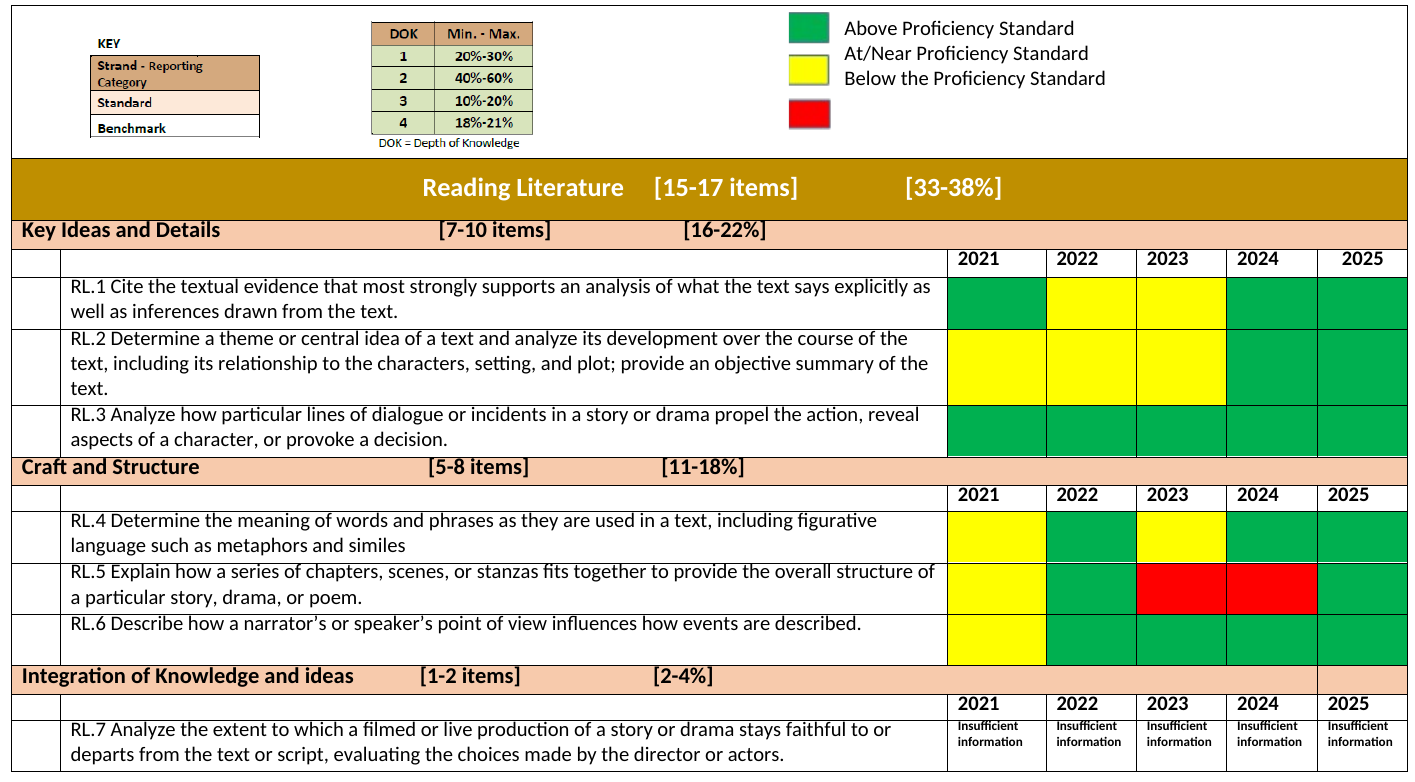
The reports also helped identify strengths. At another school I worked with, the grade 8 literature word-meaning row is green in 2025. Looking at strengths alongside weaknesses helped make the improvement work more focused. The needs varied across schools, grades and years.
Vocabulary is one of several red rows on the elementary and high school pages. I paid attention to its repeated appearance across grades and years because it gave schools a skill area to investigate and address.
One spring-report collection covers 15 school-grade groups in grades 3–10. Each report compares three ELA categories: Language/Vocabulary, Informational Reading and Literary Reading. Language/Vocabulary had the smallest share of students in the Above Standard category in 13 of the 15 groups. It tied for smallest in one more and was not the smallest in the last one. That category includes language skills as well as vocabulary. This was one collection in my archive, not a statewide sample. It helped direct attention toward an area that needed closer work.
A report is most useful when it leads to a clear learning priority, focused instruction and another look at student understanding. For vocabulary, that can mean using context, examining meaningful word parts, comparing possible meanings and explaining which details support an interpretation.
Those choices connect with assessment expectations. Wyoming’s 2012 English language arts standards, reflected in these reports, ask students to interpret words and phrases in text and use strategies such as context and word parts. Nationally, NAEP’s description of reading assessment explains that vocabulary questions connect a word’s meaning in a passage with comprehension. Wyoming ELA standards (2012) · NAEP reading assessment.
I also reviewed the public Wyoming Pearson/NAVVY resources as I shaped the games. I want them to support the word-meaning and evidence decisions students face in standards-based reading. The passages and questions are original practice material created for Pole Mountain Learning.
In the games, students read passages, work out meanings and use details to support their choices. Practice includes multiple meanings, context clues, word parts and figurative language, with connotation and word-choice effects in the middle-school bank. New sessions draw from rotating banks that favor unseen words. Students can also choose familiar words to practice again.
The feedback matters as much as the adventure. After a mistake, students can use a clue or reread, then try the same question again. If they still need help, they see an explanation before working with a fresh passage. Their first answer remains in the history, so they can see where they started and what they corrected with support.
I want students to notice their own learning: Which clue helped? Was I sure, or was I guessing? Which word should I practice again? Confidence check-ins and reflections are optional. Each game includes a student journal where learners can choose words to revisit, including words they answered correctly but want to understand better. It is called My Trail Notes in the biking game, My Fishing Journal in the fly-fishing game and My Climbing Log in the climbing game.
Teachers can view reports when they want that information, but students can play, use feedback and choose their next practice without waiting for teacher intervention. Each student taps their name to start, and progress is saved only in that browser on that device. It does not follow them to another computer. The reports show practice progress; they do not predict an official test score or establish NAVVY competency.
Three games are now available: Vocabulary Mountain Adventures: Mountain Bike Challenge for grades 3–5, Upstream Vocabulary: Fly Fishing Adventures, the fly-fishing game for grades 6–8, and Wyoming Climbing Challenge for grades 9–10, with passages and vocabulary designed for those grades.
The same approach connects the work I did with schools and the games I am building: identify a need, choose a useful next step and pay attention to what happens next. I want the games to be simple to use, with a clear purpose, feedback students can act on and progress they can understand—one passage, one clue and one next step at a time.
Choose a vocabulary game. All three games are free. No online account is needed.
- Vocabulary Mountain Adventures: Mountain Bike Challenge (grades 3–5, mountain biking): Play the biking game (opens in a new tab) · Teacher information
- Upstream Vocabulary: Fly Fishing Adventures (grades 6–8, fly fishing): Play the fly-fishing game (opens in a new tab) · Teacher information
- Wyoming Climbing Challenge (grades 9–10, rock climbing): Play the climbing game (opens in a new tab) · Teacher information
Browse all Pole Mountain Learning games
About the evidence: These are selected historical examples from my personal archive, not a representative statewide study. The screenshots preserve the reports’ original labels and colors. The report title lines, which name the schools, and outer whitespace have been cropped; schools are not named. Only school-level summary pages are shown, with no student names or IDs. The reports identify skill patterns, not the causes of those patterns or the effects of these games.
Report sources: school-level WY-TOPP stoplight comparison reports from my archive (grade 3, 4, 8 and 9 English language arts). WY-TOPP is the Wyoming Department of Education’s state assessment. Source years are the labeled report columns. Public sources: WDE ELA standards (2012) · NAEP reading assessment · Wyoming Pearson/NAVVY portal. Independently created practice; no Pearson, NAVVY or WDE endorsement is claimed.